Across the world, many SMEs make similar mistakes while managing procurement, mainly because purchasing is treated as a routine operational task rather than a strategic function. One of the most common errors is **over-reliance on a small number of suppliers**, which exposes businesses to serious risks during global disruptions such as pandemics, wars, logistics bottlenecks, or raw-material shortages. SMEs also frequently **focus only on the lowest price**, ignoring factors like supplier reliability, quality consistency, delivery timelines, and after-sales support; this often results in higher long-term costs due to defects, delays, or production stoppages. Another widespread mistake is **poor demand forecasting**, where companies buy either too much (leading to excess inventory, storage costs, and cash flow strain) or too little (causing missed orders and unhappy customers). Many SMEs still rely on **manual procurement processes**, spreadsheets, or informal communication, which increases errors, reduces transparency, and makes it difficult to track supplier performance or spending patterns.
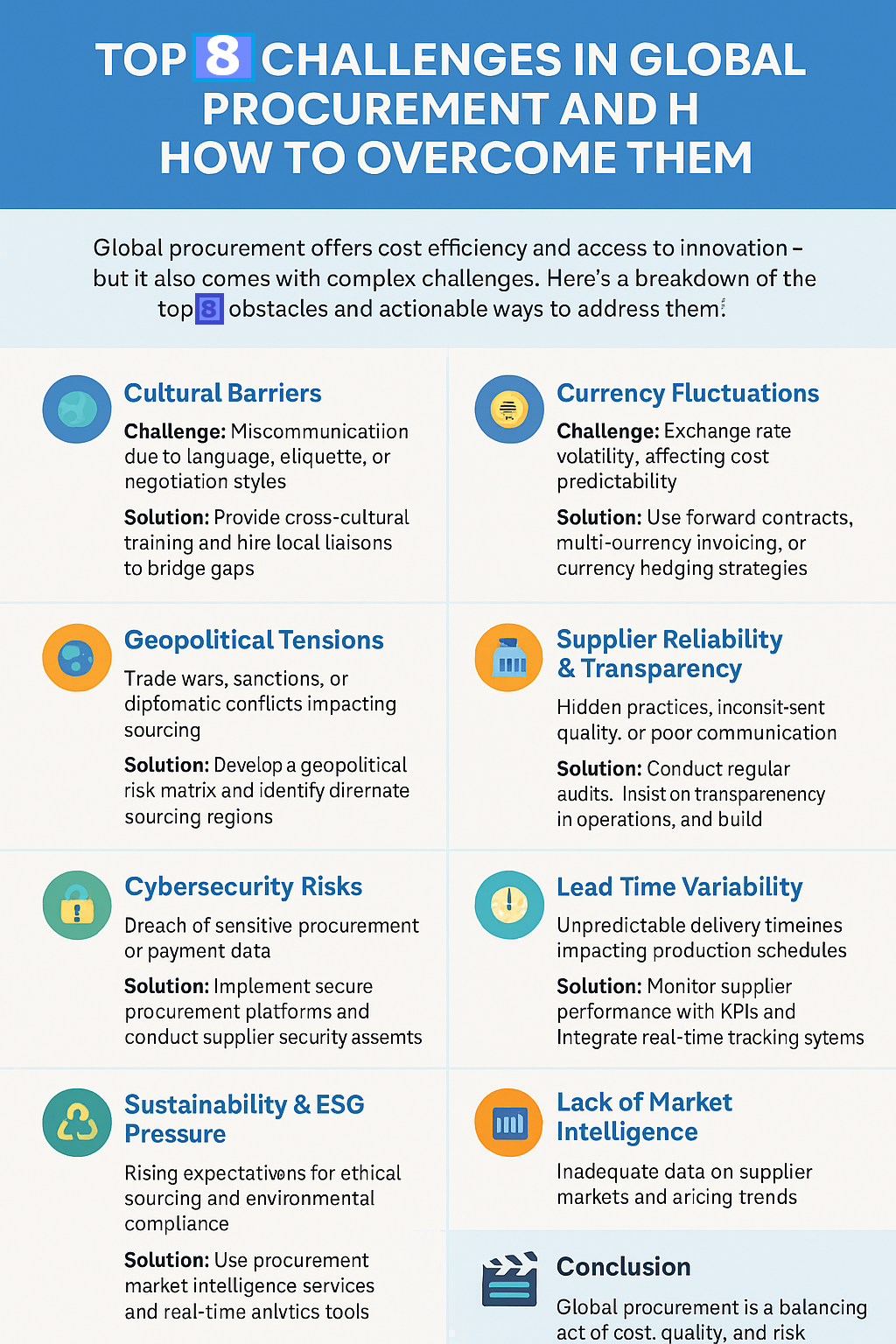
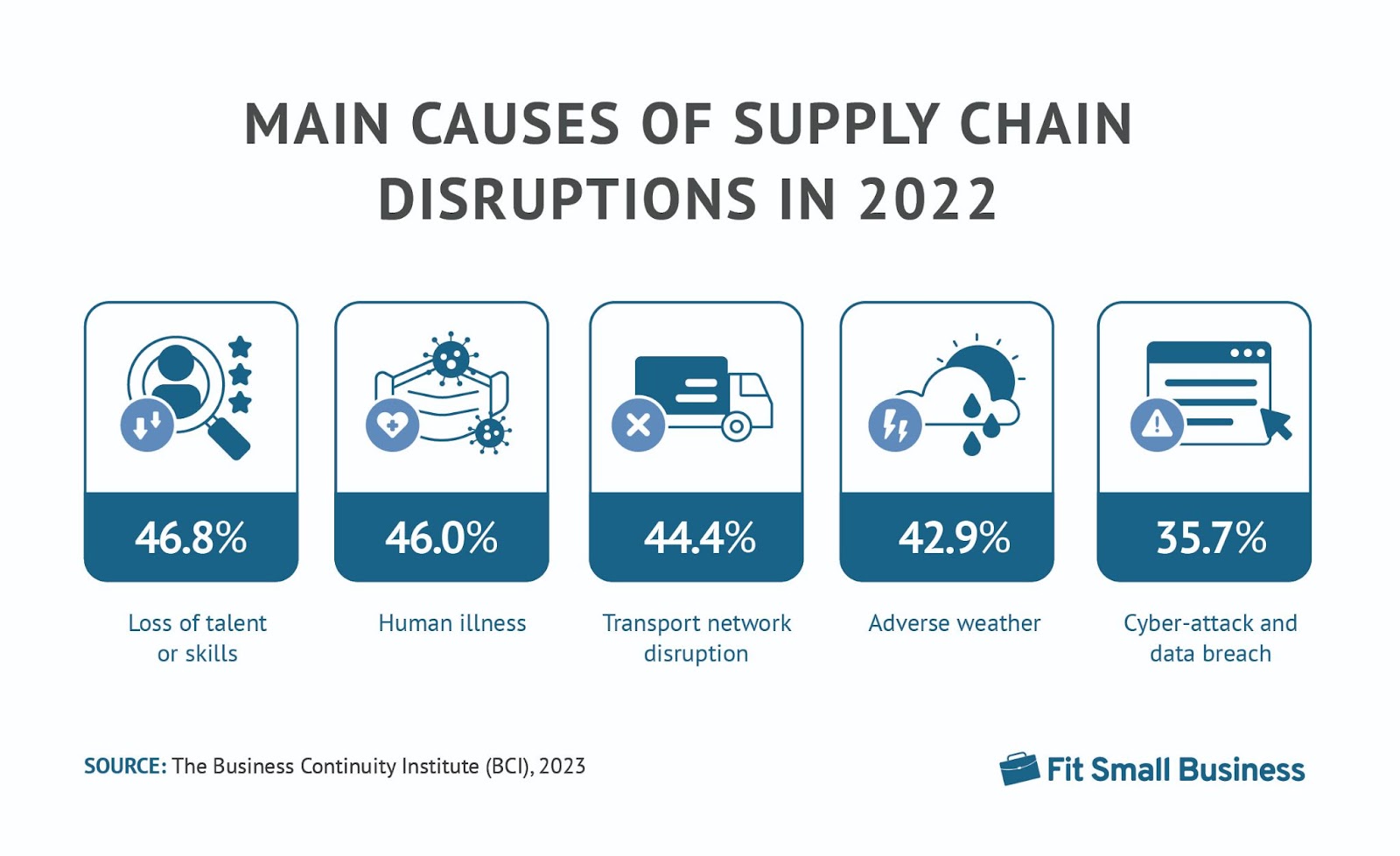
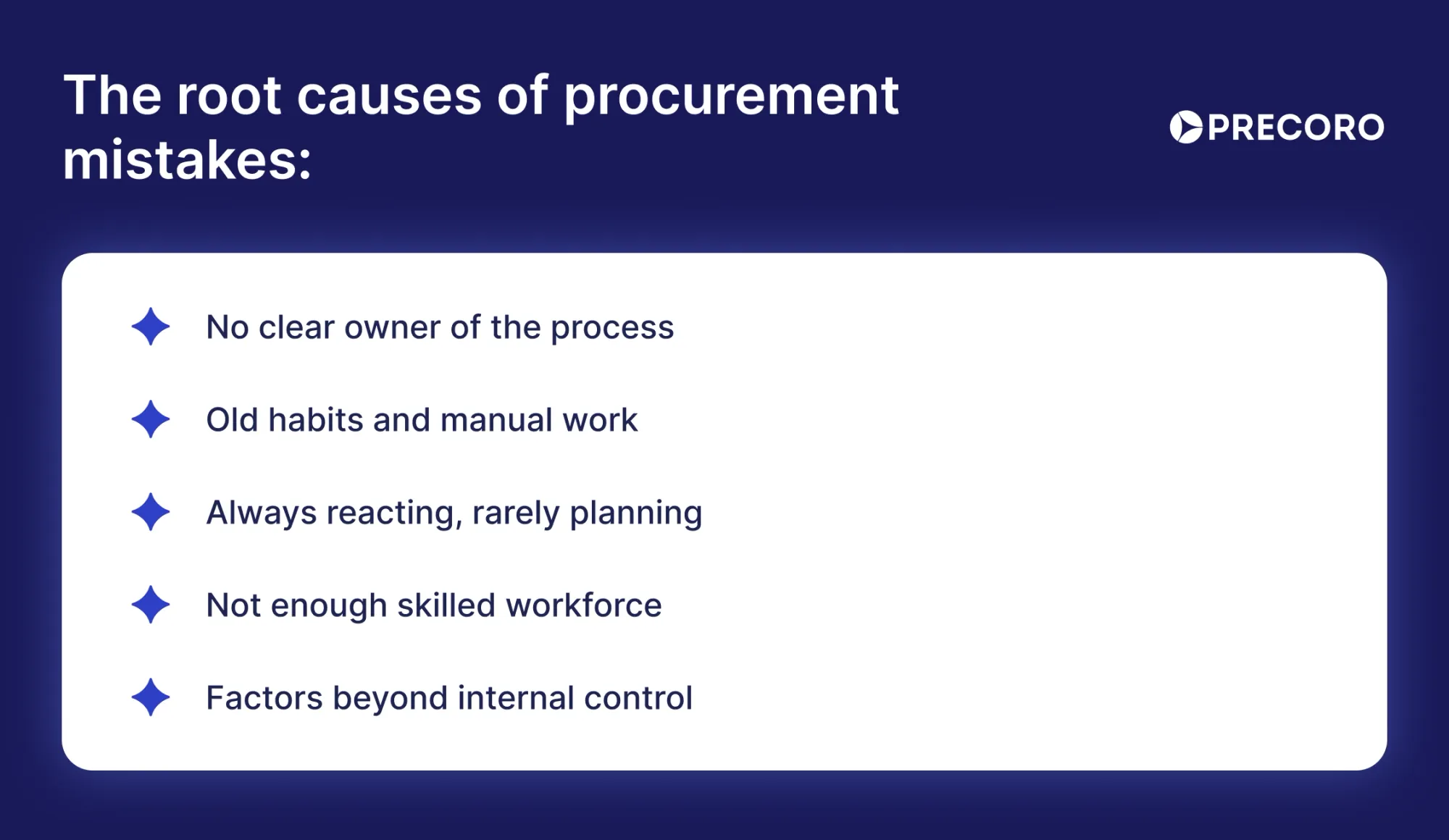

Additionally, SMEs around the world often lack **formal supplier evaluation and contract management systems**, leading to unclear terms, inconsistent pricing, and weak enforcement of delivery or quality standards. **Limited use of data and technology** is another global issue; without procurement analytics, SMEs struggle to negotiate better rates, identify cost leakages, or plan strategically. Many businesses also fail to **align procurement with overall business strategy**, purchasing reactively instead of supporting growth plans, market expansion, or sustainability goals. Finally, inadequate attention to **compliance and ethical sourcing**—such as environmental standards, labor practices, or local regulations—can create legal risks and damage brand reputation, especially when dealing with international suppliers. Globally, SMEs that overcome these mistakes by diversifying suppliers, adopting digital tools, planning demand carefully, and treating procurement as a strategic function tend to be more resilient, cost-efficient, and competitive in both local and international markets.
